When you need a dental crown, you want to make the best choice for your smile, your budget, and your long-term oral health. With several options available, choosing the best dental crowns for your situation can feel overwhelming.
The truth is, the ideal type of crown depends on factors like location in your mouth, your bite strength, aesthetic preferences, and budget. However, one material has emerged as the leading choice for most patients: zirconia.
This guide breaks down everything you need to know about dental crown materials, helping you make an informed decision with your dentist.
What Is a Dental Crown and When Do You Need One?
A dental crown is a custom-made cap that fits over a damaged or weakened tooth. It restores the tooth’s shape, size, strength, and appearance. Crowns are permanently cemented in place and function just like your natural teeth.
Your dentist may recommend a dental crown after a root canal procedure, when a large filling needs replacement, to protect a cracked tooth, or to cover a severely discolored tooth. Crowns also serve as anchors for dental bridges and cover dental implants.
Types of Dental Crown Materials
Zirconia Crowns
Zirconia dental crowns have revolutionized dental restoration and represent the best option for most patients today. Made from zirconium dioxide, these crowns deliver an unmatched combination of strength, durability, and natural appearance.
Here’s why our dentist in Grove City chooses to offer zirconia crowns:
- Exceptional strength that rivals metal crowns, making them perfect for back teeth where chewing pressure is greatest
- Beautiful aesthetics with translucency similar to natural teeth, ideal for front teeth as well
- Completely metal-free and biocompatible, eliminating allergy concerns
- Highly resistant to chipping, cracking, and fracturing
- No dark lines at the gum line like PFM crowns
- Long-lasting durability that often exceeds other crown types
Zirconia crowns are ideal for any tooth, providing both the strength for molars (like after a root canal) and the natural look needed for visible front teeth. Versatile, modern zirconia comes in various translucency levels: high-translucency for aesthetics on front teeth and high-strength for durability on back teeth, allowing your dentist to choose the perfect fit.
All-Ceramic Crowns
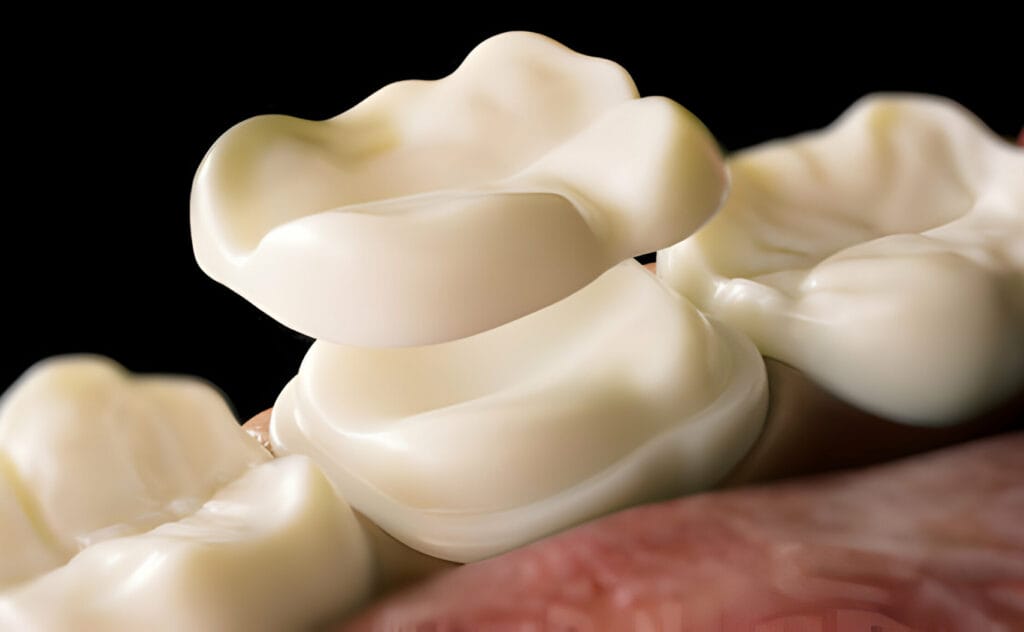
Ceramic crowns remain a popular option, particularly for front teeth restorations. Made entirely from porcelain or other ceramic materials, these crowns offer excellent aesthetics and a natural appearance that closely mimics real tooth enamel.
The translucency of ceramic crowns allows light to pass through similarly to natural teeth, making them virtually indistinguishable from surrounding teeth. Ceramic crowns are also biocompatible, making them ideal for patients with metal allergies or sensitivities.
However, traditional all-ceramic options may lack the strength needed for back teeth, where chewing forces are most intense. If you grind your teeth or have a heavy bite, your dentist may suggest stronger materials for molars.
Porcelain-Fused-to-Metal Crowns
PFM crowns combine the strength of a metal base with the aesthetic appeal of a porcelain exterior. This type of crown has been used successfully for decades and offers a reliable balance between durability and appearance.
The metal substructure provides solid strength, making PFM crowns suitable for both front teeth and back teeth. The porcelain overlay can be color-matched to your natural teeth, creating a pleasing result.
One drawback with PFM crowns is the potential for a dark line to appear at the gum line over time. As gums naturally recede with age, the metal edge may become visible. Additionally, the porcelain layer can chip away from the metal base, requiring repair or replacement.
Gold and Metal Alloy Crowns
Gold/metal crowns offer exceptional durability, longevity, and minimal wear on opposing teeth. They require less tooth removal, rarely chip or break, and can last for decades. Their main drawback is appearance, making them unsuitable for visible areas, so they are typically reserved for back teeth. Some patients also prefer metal-free options or have metal sensitivities.
Choosing the Right Crown Color
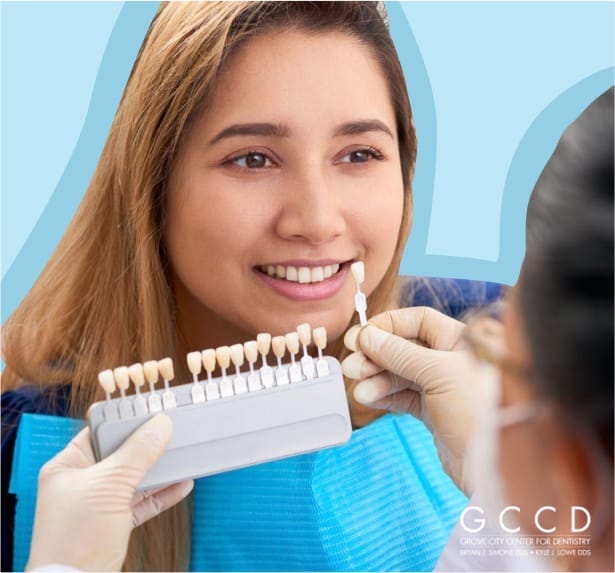
Matching your dental crown to your natural teeth requires careful attention to shade selection. Your dentist uses a shade guide to find the closest match to your existing teeth, considering factors like base color, translucency, and surface characteristics.
Here are some things to consider when color matching:
- Crowns should blend seamlessly with adjacent natural teeth
- Lighting conditions affect how colors appear, so matching occurs under multiple light sources
- Ceramic and zirconia crowns offer the most accurate color matching
- If you plan to whiten your teeth, do so before getting your crown
- Digital shade-matching technology provides precise color selection
Zirconia and ceramic crowns excel at color matching because they can be layered and customized to replicate the subtle variations found in natural teeth. Metal and PFM crowns have more limitations in achieving a perfect match, particularly in highly visible areas.
Protecting Your Investment
Regardless of which type of crown you choose, proper care extends its lifespan. Brush twice daily, floss around the crown carefully, and maintain regular checkups. Avoid chewing ice, hard candy, or other items that could damage any restoration.
If you grind your teeth at night, ask your dentist about a custom nightguard. This simple device protects both your crowns and natural teeth from excessive wear.

Making Your Decision
Choosing the right dental crown involves weighing appearance, strength, longevity, and cost. While all crown types serve their purpose, zirconia crowns consistently deliver the best overall results for most patients. Their combination of metal-like strength and ceramic-like beauty makes them the modern standard in dental restoration.
Schedule a consultation with your dentist to discuss which dental crowns are the best fit for your unique situation. Together, you can select a restoration that protects your tooth, enhances your smile, and supports your long-term oral health for years to come.